

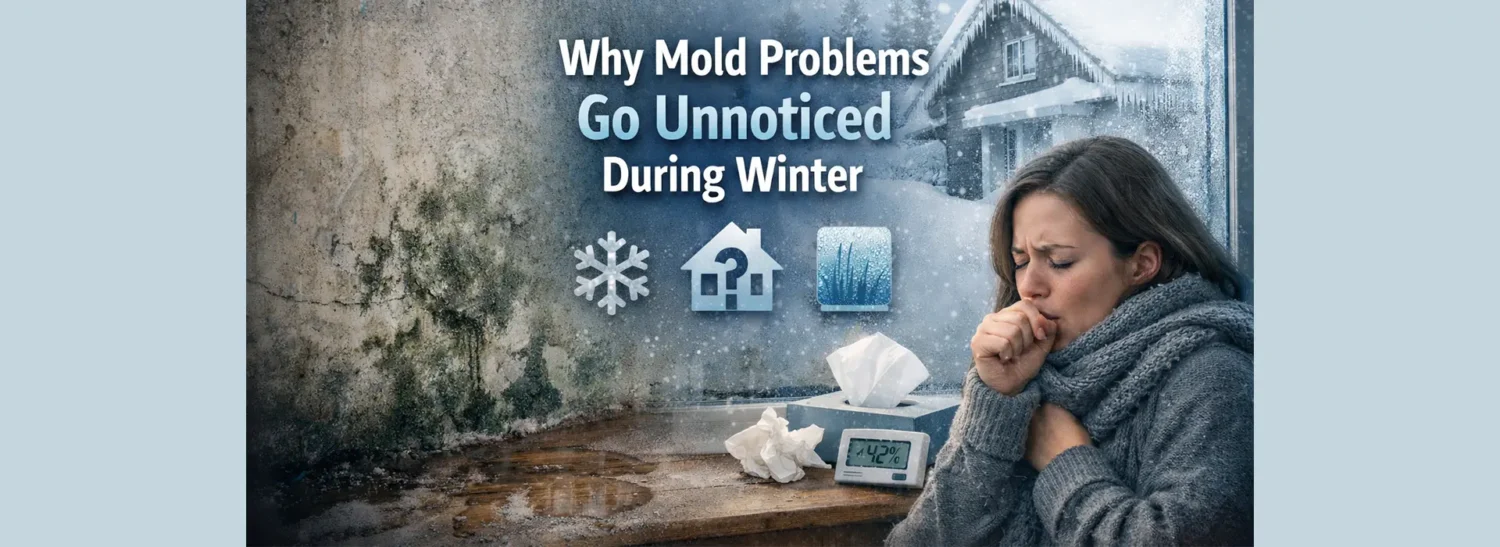
When temperatures drop and homes are sealed up tight, many homeowners assume mold is a warm-weather concern. In reality, winter mold problems are extremely common — they’re just easier to miss. Reduced ventilation, hidden moisture, and fewer visible warning signs allow mold to grow quietly behind walls, under floors, and inside basements all winter long.
By the time spring arrives, those unnoticed mold issues can turn into serious indoor air quality concerns and costly remediation projects. Understanding why mold often goes undetected during winter is the first step in protecting your home and your health.
Why Winter Creates the Perfect Conditions for Hidden Mold
Cold weather doesn’t stop mold growth. Mold only needs moisture, organic material, and limited airflow — all conditions that winter living often provides.
During winter months, homeowners typically:
-
Keep windows and doors closed
-
Run heating systems constantly
-
Spend more time indoors
-
Delay inspections and maintenance until warmer weather
These habits unintentionally create ideal environments for mold growth, especially in basements, crawl spaces, attics, and wall cavities. This is why professional mold remediation often uncovers issues that started months earlier during winter.
Less Ventilation Means Moisture Gets Trapped
One of the biggest contributors to winter mold problems is reduced ventilation. In warmer months, homes naturally “breathe” more as windows open and air circulates. In winter, that airflow disappears.
Everyday activities like cooking, showering, laundry, and even breathing release moisture into the air. Without proper ventilation, that moisture has nowhere to go. Instead, it settles into porous materials like drywall, wood framing, insulation, and carpeting.
Bathrooms without exhaust fans, laundry rooms, basements, and poorly ventilated kitchens are especially vulnerable during winter. Over time, this trapped moisture can lead directly to mold growth that requires professional mold remediation services to fully resolve.
Condensation Is Easy to Miss in Cold Weather
Condensation is one of the most overlooked winter moisture sources. When warm indoor air meets cold surfaces, moisture forms quietly — often out of sight.
Common condensation trouble spots include:
-
Basement walls and foundation surfaces
-
Windows and window frames
-
Exterior walls behind furniture
-
Attic roof decking
-
Metal ductwork and pipes
Because condensation doesn’t always leave visible water damage, mold can grow undetected for months. Many homeowners don’t realize how quickly this can escalate until they learn how mold spores spread in the house and why early detection matters.
Heating Systems Can Mask Mold Symptoms
Winter heating systems can actually hide early signs of mold. Forced-air heating dries out visible surfaces, making dampness less obvious. At the same time, HVAC systems can circulate mold spores throughout the home without homeowners realizing it.
If mold is present inside ductwork, wall cavities, or basements, heating systems may spread spores into living spaces — contributing to allergy symptoms, headaches, respiratory irritation, and persistent odors that are often blamed on “dry winter air.”
This is especially concerning with toxic varieties such as black mold. If you’re unsure what to watch for, our guide to black mold explains the risks and warning signs in more detail.
Basements Become High-Risk Zones in Winter
Basements are one of the most common places for winter mold problems to develop unnoticed. Cold soil temperatures cause foundation walls to stay cool, while indoor air remains warm. That temperature difference creates condensation along basement walls and floors.
Additionally, winter snow accumulation can melt slowly and seep into foundation cracks, increasing moisture levels without obvious leaks. Finished basements are especially vulnerable because drywall, carpeting, and insulation hide moisture problems until mold has spread behind finished surfaces.
If you’re experiencing musty smells or damp conditions below ground, understanding common basement mold causes can help you determine whether professional testing is needed.
Homeowners Are Less Likely to Inspect in Winter
Another reason mold goes unnoticed during winter is simple human behavior. Homeowners are less likely to:
-
Inspect crawl spaces or attics in cold weather
-
Address minor water issues immediately
-
Schedule professional inspections during the holidays
-
Investigate musty smells when windows can’t be opened
Mold thrives when inspections are delayed. What starts as a small moisture issue in January can turn into widespread contamination by early spring. This is why winter is actually a critical time for proactive mold prevention.
Snow, Ice, and Ice Dams Create Slow Leaks
Winter weather introduces unique moisture risks that don’t always cause immediate damage. Ice dams, snow buildup, and frozen gutters can force water beneath roofing materials and behind siding.
These slow leaks often don’t drip visibly. Instead, they saturate insulation and framing over time — creating ideal conditions for mold growth inside walls and ceilings.
Because leaks may stop once temperatures fluctuate, homeowners often don’t realize anything happened until mold becomes visible weeks or months later.
Musty Smells Are Mistaken for “Winter Air”
Many homeowners notice stale or musty odors in winter but dismiss them as normal seasonal air quality changes. In reality, that smell is often the first sign of mold growth.
Mold produces microbial volatile organic compounds (MVOCs) that create persistent odors. Because winter homes are sealed tightly, these smells linger — especially in basements, closets, and unused rooms.
If you’re unsure whether an odor points to mold, learning about mold during the winter can help you recognize when it’s more than just stale air.
Health Symptoms Are Often Misattributed
Winter is already associated with colds, dry air, and respiratory irritation. That makes mold-related symptoms easier to overlook.
Common mold-related symptoms include:
-
Persistent coughing or sneezing
-
Sinus congestion
-
Headaches
-
Fatigue
-
Skin irritation
-
Worsening asthma or allergies
When symptoms persist indoors but improve outside the home, mold exposure is often a contributing factor — even in winter.
Why Spring Often Reveals Winter Mold Problems
When spring arrives, rising temperatures and humidity levels make hidden mold problems suddenly obvious. Moisture trapped all winter becomes active, odors intensify, and visible growth may finally appear.
Homeowners are often surprised to discover extensive mold damage that actually began months earlier during winter. At that point, remediation can be more involved than if the issue had been identified earlier through professional testing and inspection.
Final Thoughts and Next Steps
Winter mold problems don’t announce themselves loudly. They develop quietly, hidden behind walls, beneath floors, and inside basements while homes stay sealed and moisture builds unnoticed.
If you’ve noticed musty odors, persistent health symptoms, condensation issues, or past water intrusion, it’s important not to wait until spring. Early detection can help limit damage, reduce remediation costs, and protect your indoor air quality.
If you suspect mold in your home, contact CHR Mold Remediation today for a professional inspection. Our team can identify hidden winter mold issues and help you take the right next steps before the problem grows.
Share this Post