
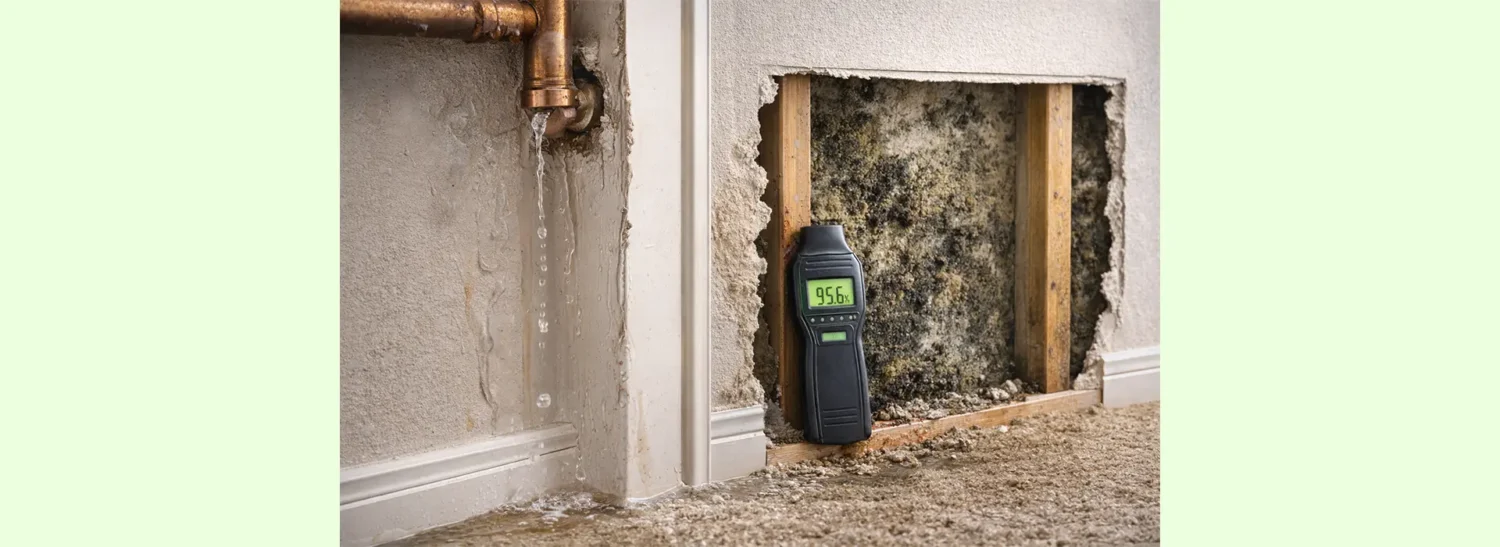
Water damage is one of the most common issues homeowners face—and one of the most misunderstood. Many people assume that once standing water is removed or surfaces dry, the problem is solved. In reality, water damage mold growth can begin quickly and quietly, often long after the visible signs of water are gone.
Understanding how water damage leads to mold problems is key to protecting your home, indoor air quality, and long-term property value.
Why Water Damage Creates the Perfect Conditions for Mold
Mold needs only three things to grow: moisture, organic material, and time. Water damage provides all three.
When water enters a home—whether from flooding, leaks, or condensation—it soaks into building materials like drywall, wood, insulation, and flooring. These materials retain moisture far longer than most homeowners realize.
Without proper drying, water-damaged areas become ideal environments for water damage mold growth, even if surfaces appear dry to the touch.
How Quickly Mold Can Develop After Water Damage
One of the biggest misconceptions is that mold takes weeks or months to form. In reality, mold can begin growing within 24 to 48 hours after water exposure.
This rapid timeline is why delayed action often leads to mold problems. By the time homeowners notice musty odors or discoloration, mold may already be established behind walls, under floors, or inside ceilings.
This is also why water damage restoration isn’t just about removing water—it’s about preventing mold before it starts.
Hidden Moisture: The Real Risk After Water Damage
Water doesn’t always stay where you see it. It travels through walls, beneath flooring, and into insulation, often spreading far beyond the original source.
Common areas where hidden moisture leads to mold include:
-
Wall cavities
-
Behind baseboards
-
Under carpet and padding
-
Inside ceilings below roof or plumbing leaks
-
Crawl spaces and basements
Even small leaks can cause significant mold issues if moisture remains trapped. This is why professional assessments are critical after any water intrusion.
From Flooding to Mold: A Common Progression
Basements are especially vulnerable to water damage mold growth. Flooding from heavy rain, sump pump failure, or foundation seepage often saturates porous materials quickly.
If cleanup is delayed or incomplete, mold growth frequently follows. Our guide on Flooded Basement Cleanup explains why thorough drying and proper cleanup are essential to preventing mold from spreading.
Simply removing standing water is not enough—moisture control and material assessment are just as important.
Signs Water Damage Has Turned Into a Mold Problem
Mold caused by water damage doesn’t always announce itself clearly. Many signs are subtle at first and easy to overlook.
Common indicators include:
-
Persistent musty odors
-
New or spreading stains on walls or ceilings
-
Peeling, bubbling, or cracking paint
-
Increased allergy or respiratory symptoms indoors
-
Warping or soft spots in floors or drywall
If these signs appear after a water event, mold inspection services should be considered to determine whether mold growth is present.
Why Drying Alone Doesn’t Always Stop Mold
Fans and dehumidifiers can help reduce moisture, but they don’t always reach water trapped inside walls or under flooring. Surface-level drying may give a false sense of security while moisture remains hidden.
Without proper moisture detection and containment, mold can continue growing out of sight. This is why professional mold inspection focuses on both visible and hidden moisture conditions.
The Role of HVAC Systems in Mold Spread
Once mold begins growing due to water damage, spores can spread through airflow—especially if HVAC systems are running.
Moisture near vents, ductwork, or air handlers increases the risk of spores circulating throughout the home. This can turn a localized mold issue into a whole-home air quality concern.
Addressing water damage early reduces the risk of mold spreading beyond the original affected area.
Why DIY Cleanup Often Makes Mold Problems Worse
Homeowners often attempt to handle water damage themselves, especially when the damage seems minor. Unfortunately, DIY cleanup frequently misses hidden moisture and contaminated materials.
Common DIY mistakes include:
-
Drying without moisture testing
-
Painting over water stains
-
Removing visible mold without containment
-
Ignoring insulation and framing
These approaches may temporarily hide symptoms but often allow water damage mold growth to continue unchecked.
How Professionals Stop Mold After Water Damage
Professional remediation follows a systematic process designed to eliminate moisture and prevent mold recurrence.
This typically includes:
-
Identifying and correcting the water source
-
Measuring moisture levels in materials
-
Removing unsalvageable water-damaged materials
-
Containing affected areas
-
Safely addressing mold growth if present
This comprehensive approach ensures the problem is solved at the source—not just on the surface.
When to Act After Water Damage
The sooner water damage is addressed, the easier it is to prevent mold problems. Waiting—even a few days—can significantly increase remediation complexity and cost.
You should seek professional help if:
-
Water damage was extensive or prolonged
-
Materials feel damp days after drying
-
Odors develop following a water event
-
Health symptoms worsen indoors
Early intervention protects both your home and your indoor air quality.
Final Thoughts: Water Damage and Mold Are Closely Connected
Water damage and mold are not separate issues—they are directly linked. When moisture isn’t properly managed, water damage and mold growth become a natural consequence.
Understanding this connection helps homeowners take water damage seriously and act quickly before mold problems take hold.
If your home has experienced water damage and you’re concerned about mold, contact CHR Mold Remediation for a professional inspection. We’ll identify hidden moisture, prevent mold growth, and help protect your home before small issues become major problems.
Share this Post