
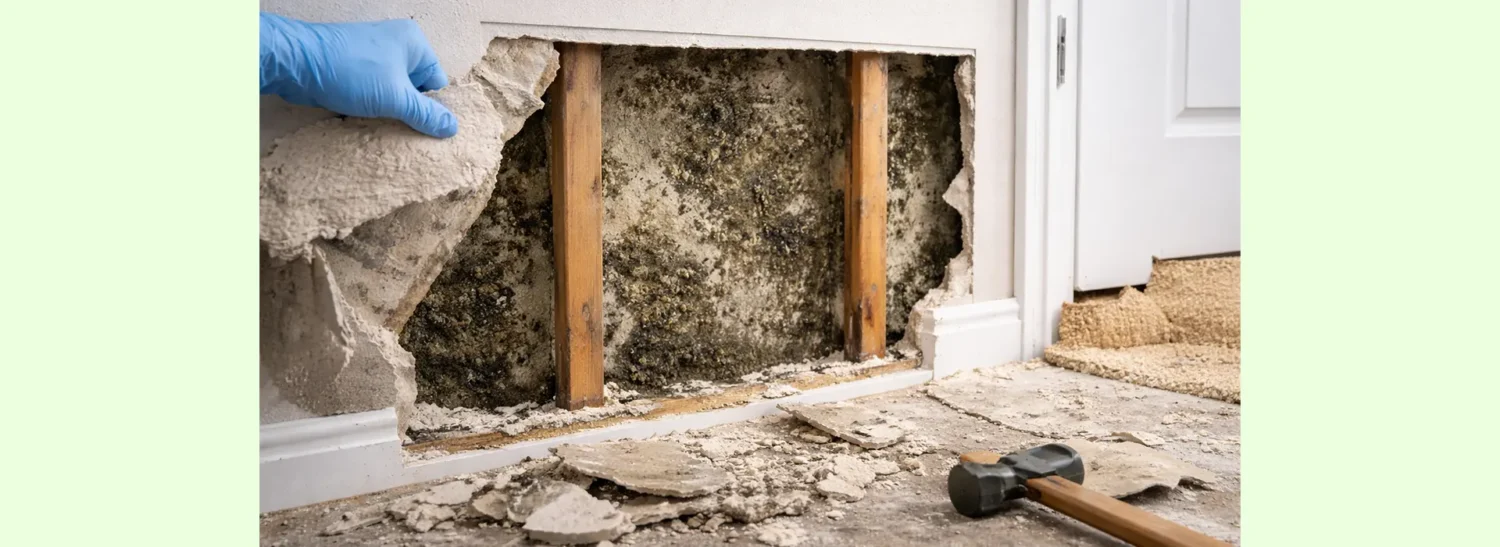
Mold doesn’t always show up where you can see it. In many homes, the most serious mold problems are hidden behind drywall, insulation, or wall cavities—quietly spreading long before homeowners realize there’s an issue. Recognizing the signs of mold in walls early can help prevent costly repairs and protect your indoor air quality.
If something in your home feels “off” but you can’t pinpoint why, mold behind the walls may be the reason.
Why Mold Grows Behind Walls
Walls create the perfect environment for mold when moisture is present. Leaks, condensation, and humidity can all introduce water into wall cavities, where airflow is limited and drying is slow.
Common causes include:
-
Plumbing leaks inside walls
-
Roof leaks traveling downward
-
Condensation from HVAC lines
-
Poor insulation creating temperature differences
-
Past water damage that wasn’t fully dried
Because mold behind walls isn’t exposed to light or air movement, it often spreads unnoticed until warning signs appear.
Signs of Mold in Walls Homeowners Shouldn’t Ignore
Hidden mold still leaves clues. Knowing what to watch for can help you take action before the problem escalates.
Some of the most common signs of mold in walls include:
-
Musty or earthy odors that don’t go away
-
Discoloration or staining on drywall or paint
-
Peeling, bubbling, or cracking paint
-
Walls that feel damp or soft to the touch
-
Warping or bulging drywall
If any of these signs appear, especially after a leak or water event, it’s often time to consider a professional mold inspection.
Persistent Odors with No Visible Mold
One of the earliest signs of mold in walls is smell. Mold produces microbial volatile organic compounds (MVOCs) that create a musty odor, even when growth is completely hidden.
If the smell is stronger near certain rooms, corners, or wall sections, it may indicate mold growing behind drywall. Air fresheners and cleaning products won’t eliminate these odors if the source remains active.
Discoloration, Stains, or Wall Changes
Stains that appear yellow, brown, or gray can be a warning sign of moisture behind the wall. These marks may grow slowly or return after being painted over.
When discoloration is paired with texture changes—such as bubbling or cracking paint—it often means moisture is still present. Mold frequently develops in these damp areas, even if stains seem minor.
Mold Behind Walls and Water Leaks
Hidden mold is very often tied to unnoticed water leaks. Even small, slow leaks can introduce enough moisture to support mold growth over time.
Homeowners dealing with recurring stains or damp areas should understand how leaks contribute to mold. Our guide on Ceiling Water Leak explains how moisture travels through walls and ceilings, often leading to mold growth far from the original source.
Addressing the leak alone isn’t enough—mold may already be established inside the wall.
Allergy Symptoms That Only Occur at Home
Health symptoms can also be signs of mold in walls. If you or your family experience symptoms that improve when leaving the house, hidden mold should be considered.
Common symptoms include:
-
Sneezing or congestion indoors
-
Eye or throat irritation
-
Increased asthma symptoms
-
Fatigue or headaches
Because mold spores can enter the air through tiny wall gaps or outlets, exposure can occur even when mold isn’t visible.
Why Hidden Mold Is More Dangerous Than Visible Mold
Visible mold often prompts quick action. Hidden mold, on the other hand, can spread for months or even years without detection.
Mold behind walls can:
-
Compromise indoor air quality
-
Spread into insulation and framing
-
Increase remediation costs
-
Lead to structural damage
-
Affect multiple rooms
This is why mold inspection services focus on moisture detection and hidden growth—not just surface-level mold.
DIY Fixes That Don’t Solve the Problem
Painting over stains, running dehumidifiers, or sealing odors may temporarily hide symptoms, but they won’t stop mold growth inside walls.
DIY fixes often fail because:
-
The moisture source isn’t addressed
-
Mold remains trapped behind drywall
-
Spores continue circulating indoors
True resolution requires identifying the cause, containing affected areas, and safely removing contaminated materials through mold remediation services.
How Professionals Detect Mold Behind Walls
Professional mold inspections use tools and methods designed to locate hidden problems without unnecessary damage.
These may include:
-
Moisture meters
-
Infrared imaging
-
Targeted air sampling
-
Strategic inspection of high-risk areas
This approach allows specialists to confirm whether mold is present behind walls and determine the safest path forward.
When to Schedule a Mold Inspection
If you notice recurring odors, unexplained wall damage, or symptoms that worsen indoors, waiting can make the situation worse.
Early inspection can:
-
Limit mold spread
-
Reduce repair costs
-
Protect indoor air quality
-
Provide peace of mind
Catching hidden mold early often means simpler remediation and faster recovery.
Final Thoughts: Don’t Overlook the Signs of Mold in Walls
Mold doesn’t need to be visible to cause problems. The signs of mold in walls are often subtle at first, but they tend to worsen over time if ignored.
If something doesn’t feel right in your home, trust that instinct. Hidden mold is far easier to address when caught early.
If you’re noticing possible signs of mold behind your walls, contact CHR Mold Remediation to schedule a professional mold inspection. We’ll identify hidden mold, address the source, and help restore a healthier home environment.
Share this Post