
If you’ve noticed dark spots on a bathroom wall, musty smells in a basement, or discoloration around windows, you may be wondering whether you’re dealing with mold vs mildew — and whether it’s something you should worry about.
While mold and mildew are related, they are not the same thing. Knowing the difference can help homeowners decide whether a simple cleanup is enough or if professional help is needed. In many cases, early identification can prevent the need for more extensive mold remediation services later on.
In this guide, we’ll explain what separates mold from mildew, where each typically appears, and when it’s time to bring in a professional.
What Is Mildew?
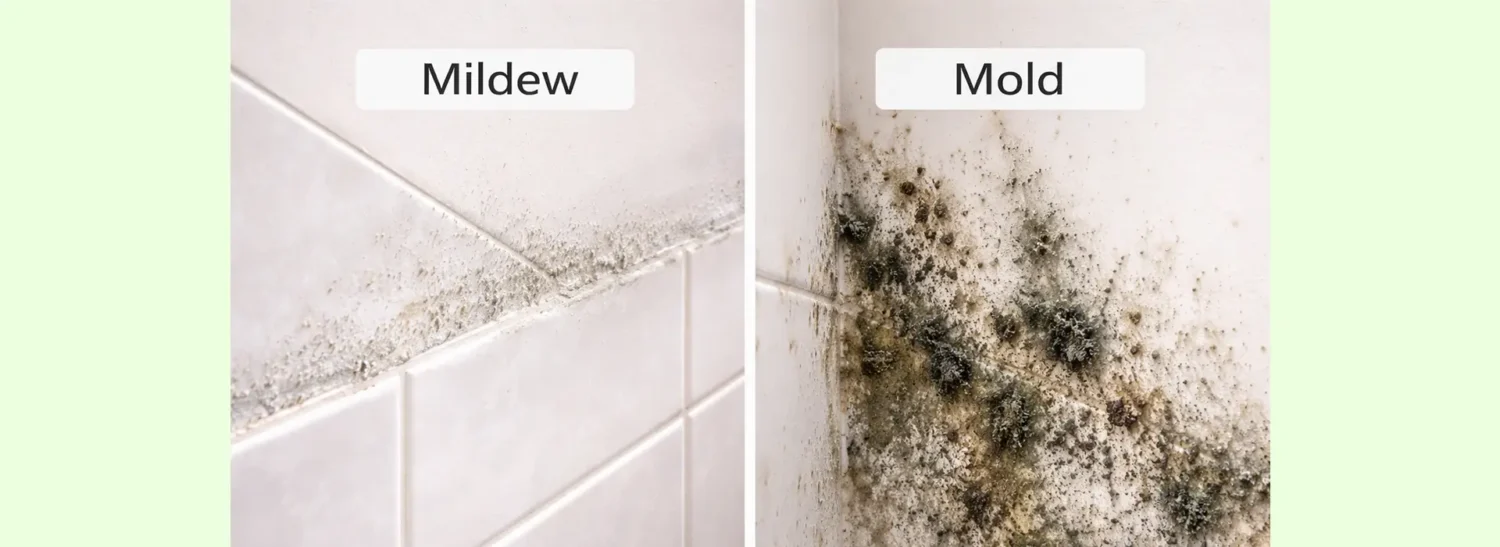
Mildew is a surface-level fungal growth that typically appears in areas with high humidity and limited airflow.
Common characteristics of mildew include:
-
Light gray, white, or pale green coloring
-
Flat or powdery appearance
-
Growth on damp surfaces like tile, grout, shower curtains, and window sills
-
Easier cleanup compared to mold
Mildew often forms early, before moisture problems become more serious. While it can be unsightly and cause odors, mildew is generally less invasive than mold.
However, recurring mildew is often a warning sign of ongoing moisture issues that could eventually lead to mold growth if not addressed.
What Is Mold?
Mold is a more advanced fungal growth that penetrates surfaces and building materials rather than remaining on the surface.
Common characteristics of mold include:
-
Black, green, brown, or bluish coloring
-
Fuzzy, slimy, or textured appearance
-
Growth behind walls, under flooring, in basements, crawl spaces, and attics
-
Potential to impact indoor air quality and building materials
Unlike mildew, mold doesn’t simply wipe away. If moisture remains, mold can continue spreading unseen behind walls and into porous materials.
Understanding how mold spores spread in the house helps explain why mold problems often grow even after surface cleaning.
Mold vs Mildew: Key Differences at a Glance
| Feature | Mildew | Mold |
|---|---|---|
| Color | White, gray, light green | Black, green, brown, blue |
| Texture | Powdery or flat | Fuzzy, slimy, or rough |
| Location | Bathrooms, windows, grout | Basements, walls, crawl spaces |
| Surface Depth | Surface only | Grows into materials |
| Cleanup | Often manageable | Often requires professionals |
Understanding these differences helps homeowners avoid underestimating a mold issue by assuming it’s “just mildew.”
Where Mold and Mildew Commonly Appear
Mildew-prone areas include:
-
Showers and tubs
-
Bathroom ceilings
-
Window frames
-
Laundry rooms
These areas typically experience surface moisture that dries between uses.
Mold-prone areas include:
-
Basements and crawl spaces
-
Behind drywall
-
Under carpeting
-
Around roof or plumbing leaks
Because these areas stay damp longer, they often require professional evaluation and, in some cases, full mold remediation services to resolve the problem properly.
Health Considerations: Mold vs Mildew
Mildew may trigger mild allergy symptoms such as sneezing or irritation for sensitive individuals.
Mold exposure, however, may contribute to:
-
Respiratory irritation
-
Worsened asthma symptoms
-
Persistent coughing or congestion
-
Headaches or fatigue
While not all mold is toxic, prolonged exposure is never ideal — especially for households with children, elderly occupants, or individuals with respiratory conditions.
Can You Clean Mold or Mildew Yourself?
Small patches of mildew can often be cleaned when proper ventilation is present. The key is correcting the moisture source so it does not return.
Mold becomes a concern when:
-
Growth covers a large area
-
Mold returns after repeated cleaning
-
Musty odors are present without visible growth
-
Mold appears after water damage or flooding
In these situations, professional inspection and remediation are strongly recommended.
Why Mold Is Often Mistaken for Mildew
Many homeowners assume discoloration is mildew because it:
-
Appears on visible surfaces
-
Does not immediately cause symptoms
-
Can sometimes be wiped away initially
In reality, mold often begins behind surfaces, meaning what you see may only be part of the issue. By the time mold becomes visible, it may already be affecting materials beneath the surface.
This is why professional inspection is especially important when moisture problems have been ongoing.
When to Call a Mold Professional
You should contact a mold remediation specialist if:
-
Spots return after cleaning
-
Musty odors persist
-
Growth appears in basements or crawl spaces
-
There has been recent water damage
-
Household members experience unexplained symptoms
A professional mold inspection can determine whether the issue is mildew, surface mold, or a deeper contamination problem.
Final Thoughts: Mold vs Mildew
Understanding mold vs mildew helps homeowners take the right next step — whether that’s improving ventilation or scheduling a professional inspection.
Addressing the issue early can prevent more serious damage and reduce the need for extensive mold remediation later.
If you’re unsure whether what you’re seeing is mold or mildew, CHR Mold Remediation can help. Our team provides professional inspections and complete mold remediation services to protect your home and your health.
Contact CHR Mold Remediation today to get peace of mind within your home!
Share this Post