
Many homeowners think of mold as a surface problem—something you can see growing on walls, ceilings, or around windows. What’s often overlooked is how mold impacts the air you breathe every day. The truth is, mold-related indoor air quality issues can develop long before visible growth becomes obvious…
If you’ve noticed lingering odors, increased allergy symptoms, or a general feeling that your indoor air isn’t as fresh as it should be, mold may be playing a bigger role than you realize—and may be a sign it’s time to consider a professional mold inspection.
How Mold Impacts Indoor Air Quality
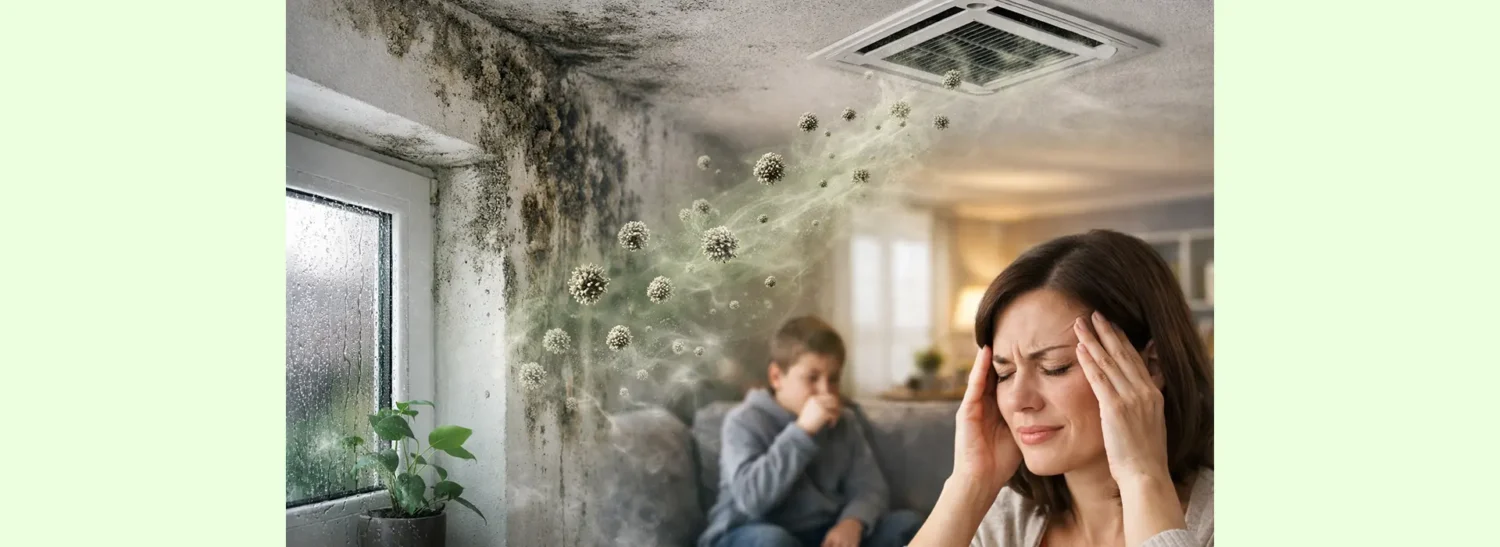
Mold doesn’t just stay where it grows. As it develops, it releases microscopic spores into the air. These spores circulate through your home, moving from room to room through natural airflow, HVAC systems, and everyday activity.
Once airborne, mold spores can be inhaled repeatedly without homeowners ever realizing it. This is why mold indoor air quality concerns are often present even when mold isn’t clearly visible—and why mold inspection services often uncover issues homeowners didn’t expect.
Homes with the following conditions are especially vulnerable:
-
Excess moisture or humidity
-
Past water damage or leaks
-
Poor ventilation
-
Damp basements or crawl spaces
-
Bathrooms and kitchens without proper exhaust
Mold thrives in hidden areas, meaning air quality can be compromised even when living spaces appear clean.
Signs Mold May Be Affecting Your Indoor Air
Indoor air quality problems caused by mold don’t always come with obvious warning signs. However, many homeowners experience subtle clues that something isn’t right.
Common indicators include:
-
Persistent musty or earthy odors
-
Worsening allergies or asthma symptoms
-
Frequent headaches or sinus irritation
-
Chronic coughing or throat irritation
-
Feeling better when away from home for extended periods
If these symptoms improve when you leave the house and return when you’re home, mold indoor air quality issues should be considered—especially in homes with a history of water damage restoration or moisture problems.
Why Mold Spores in the Air Are Hard to Eliminate
Mold spores are lightweight and designed to travel. Once released, they can remain suspended in the air for long periods, increasing exposure risk throughout the home.
This is why surface cleaning alone rarely solves mold-related air quality problems. Even if visible mold is removed, spores can continue circulating if the source hasn’t been properly addressed.
Understanding the Mold Remediation Process helps explain why professional remediation focuses on containment, air filtration, and complete removal—not just cleaning what you can see.
Health Effects Linked to Poor Mold Indoor Air Quality
Not everyone reacts to mold exposure the same way, but long-term exposure can cause issues even in otherwise healthy individuals.
Potential health effects include:
-
Increased allergy sensitivity
-
Respiratory irritation
-
Worsening asthma symptoms
-
Fatigue or brain fog
-
Skin or eye irritation
Children, older adults, and individuals with compromised immune systems are often more sensitive to mold-related air quality issues, making early mold removal especially important.
Mold and HVAC Systems: A Hidden Air Quality Risk
One of the biggest reasons mold indoor air quality problems escalate is HVAC involvement. When mold develops near ductwork, air handlers, or vents, spores can be distributed throughout the entire home every time the system runs.
This can lead to:
-
Widespread mold exposure
-
Odors appearing in multiple rooms
-
Reduced effectiveness of air filters
-
Persistent air quality complaints
In these situations, homeowners often discover that mold remediation services are necessary to fully restore indoor air quality—not just HVAC maintenance.
Why DIY Air Quality Fixes Often Fail
Many homeowners attempt to fix air quality issues with:
-
Dehumidifiers
-
HEPA air purifiers
-
Mold sprays or cleaners
-
Odor masking products
While these tools may reduce symptoms temporarily, they don’t stop active mold growth or prevent spores from entering the air. Without professional containment and removal, air quality issues tend to return.
True improvement in mold indoor air quality requires identifying the moisture source, safely removing affected materials, and preventing future growth.
Professional Mold Inspection and Air Quality Testing
Professional inspections focus on more than visible mold. Specialists evaluate moisture levels, airflow patterns, and areas where mold commonly hides.
A proper assessment may include:
-
Visual inspection of high-risk areas
-
Moisture readings
-
Air sampling when appropriate
-
Identification of contributing conditions
This comprehensive approach ensures both mold growth and indoor air quality concerns are addressed correctly from the start.
Final Thoughts: Don’t Ignore Mold Indoor Air Quality Concerns
Mold doesn’t need to be visible to affect your home. If indoor air smells musty, feels heavy, or seems to impact how you feel day to day, mold indoor air quality issues may already be present.
Addressing the problem early helps prevent wider contamination and protects both your home and your health.
If you’re concerned about mold affecting your indoor air quality, contact CHR Mold Remediation to schedule a professional mold inspection. We’ll identify the source, improve your air quality, and help restore a healthier home environment.
Share this Post